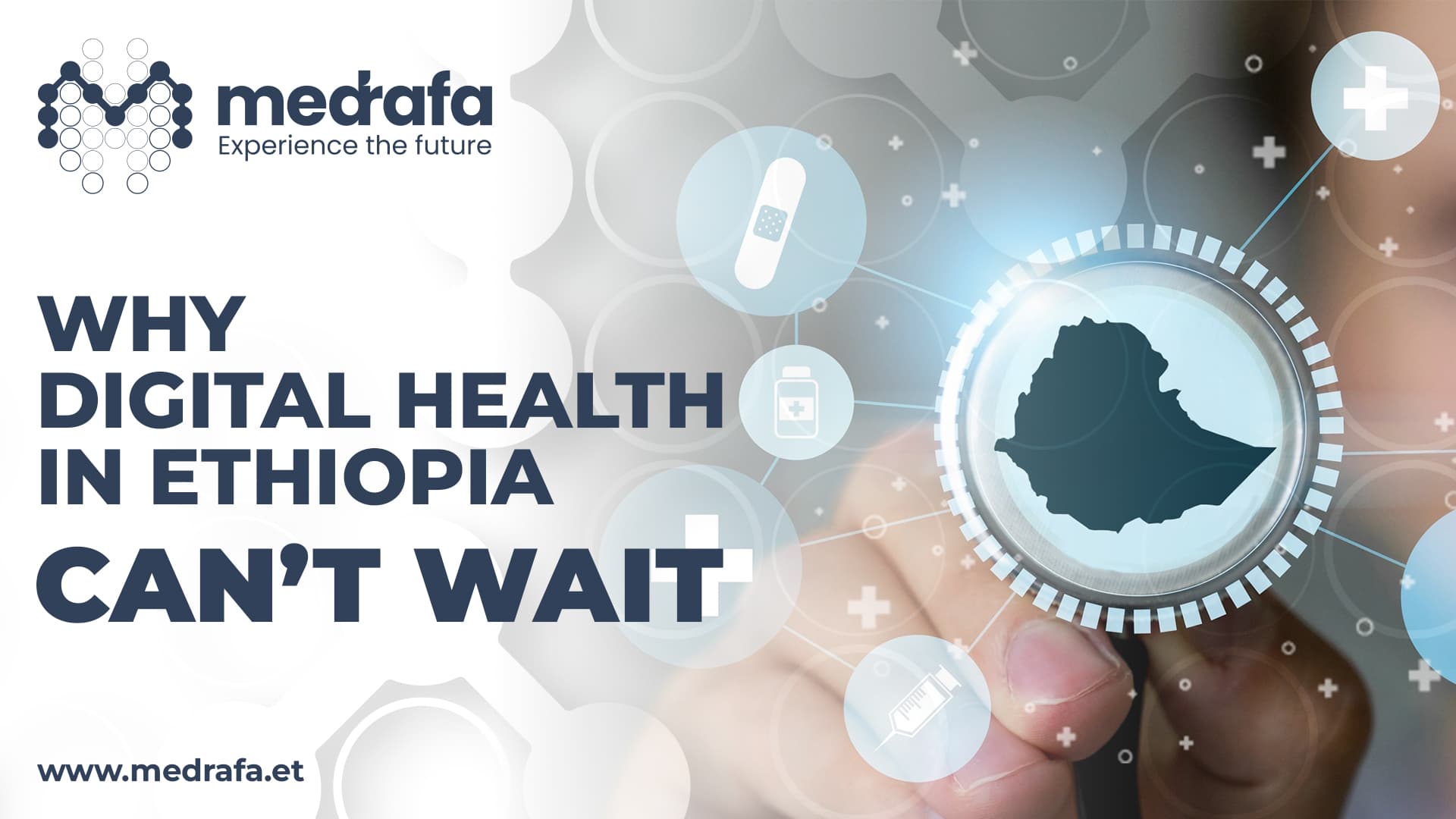
Why Digital Health in Ethiopia Can’t Wait
About 2 min read
In every pharmacy, there’s a fundamental truth: information is power. But when that information lives on paper, in notebooks, or in the owner’s memory, that power is fragmented, delayed, and often wasted. Across low- and middle-income countries, digital health technologies are increasingly recognized not just as “nice to have,” but as indispensable tools for improving system efficiency and expanding access to care. Research from diverse settings shows digital tools improve data collection, management, and decision support – all of which directly connects to how pharmacies manage stock, respond to demand trends, and serve patients reliably.
For many health systems, that transformation begins with digitizing workflows. Digital health isn’t a vague concept – it’s a wide spectrum of technologies that include inventory platforms, point-of-sale integration, and real-time analytics. In contexts like sub-Saharan Africa, studies and industry analyses indicate that digital tools could boost overall health system efficiency by as much as 15% by 2030, freeing up resources that would otherwise be lost to inefficiency and waste. That’s not hypothetical – it’s the kind of potential that organizations, governments, and private sector innovators are already starting to plan around.
For pharmacy owners in Ethiopia, the stakes of digital adoption are clear. Manual systems – ledgers, mental tallies, periodic physical counts – are inherently reactive: you only find out you’re missing a critical item after the stockout or expiry happens. Digital systems flip that script. They deliver continuous visibility into stock levels so you can forecast demand accurately, adjust ordering on the fly, and reduce costly emergencies. This shift isn’t just about speed; it’s about resilience.
There are challenges to adoption – infrastructure, training, cost perception – but research consistently shows that performance expectancy (the belief that a system will improve tasks) and supportive conditions (training, reliable access) are the strongest predictors of real use in low-resource settings. In other words: success depends on pairing the right tools with an environment that enables them, not just dropping software into chaos.
If you’re still relying on paper and chance, consider this: every day without a real-time digital backbone is a day of unknown losses, hidden errors, and missed opportunities to elevate your pharmacy from good to great. The future of healthcare in Ethiopia is digital – and the sooner we embrace it, the sooner we secure better outcomes for patients and business.
Originally published on Medrafa. View original publication